
How to Get Rid of Earwigs
Earwigs look worse than they are. The pincers are for show and mating, not for you, and the old story about them crawling into ears is a myth. They are a moisture-driven nuisance that wanders indoors when the yard gets too dry or too wet, and a perimeter treatment is the standard way to stop them at the door.
How to identify them
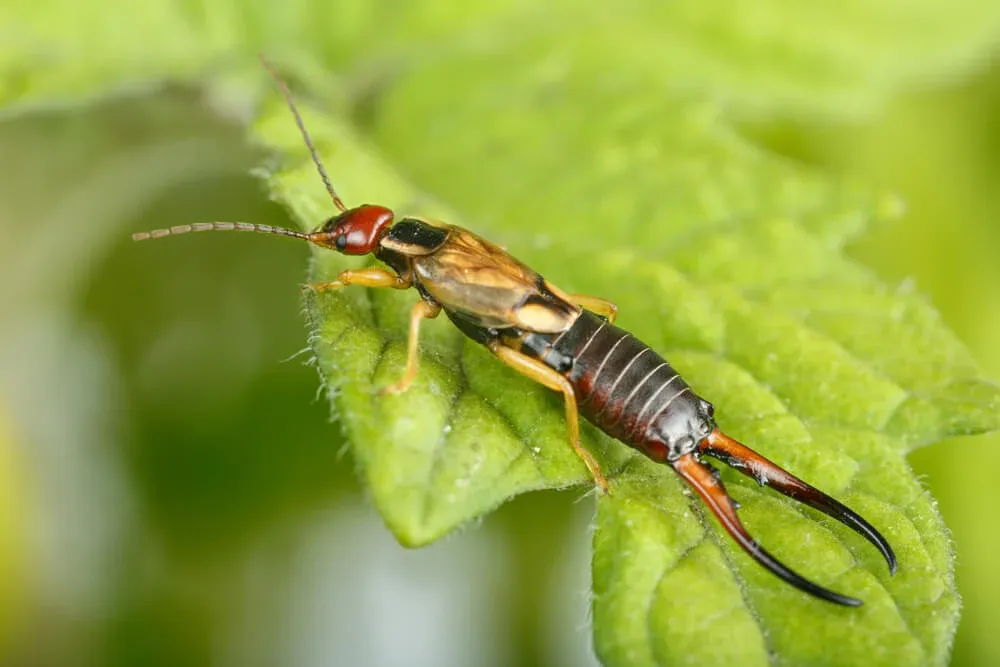
Earwigs are about half an inch long, dark reddish-brown, with long antennae and an unmistakable pair of pincers at the back end. They have wings but rarely fly. If you are finding slim, fast, pincer-tailed bugs in a damp corner at night, those are earwigs.
Where they hide
Outdoors they spend the day under mulch, rocks, logs, and leaf litter, anything damp against the foundation. Indoors they turn up in the wettest rooms, bathrooms, basements, kitchens, under sinks, and around door and window sills where moisture collects. They move at night and are drawn to lights.
Why it matters
Earwigs are mostly a nuisance rather than a danger, but they show up in numbers and turn up where you do not want them, along baseboards and in boxes and laundry left on the floor. Outdoors they chew on garden plants and seedlings. Finding them indoors is usually a sign of excess moisture that is worth addressing on its own.
How to get rid of them
Earwigs are an outside-in problem, so the fix is an exterior perimeter treatment. Spray a band around the foundation, up the base of the walls, and around the doors, windows, and cracks where they cross to get inside. Clearing damp mulch and leaf litter away from the foundation makes the treated barrier work even better.

Killer Pro Plan
Answer a few quick questions and we match you to the right kit for earwigs. It ships the same professional-strength treatment the pros use and a schedule that keeps the perimeter sealed through the damp months.
Safe around kids and pets. Follow the label, and your family and pets can be back in the yard. Clear instructions ship in every kit.